
Build One Backup Dinner From Pantry Basics
Choose one familiar pantry dinner that fits a disrupted evening. Check ingredients, equipment, storage instructions, and how to replace what you use.
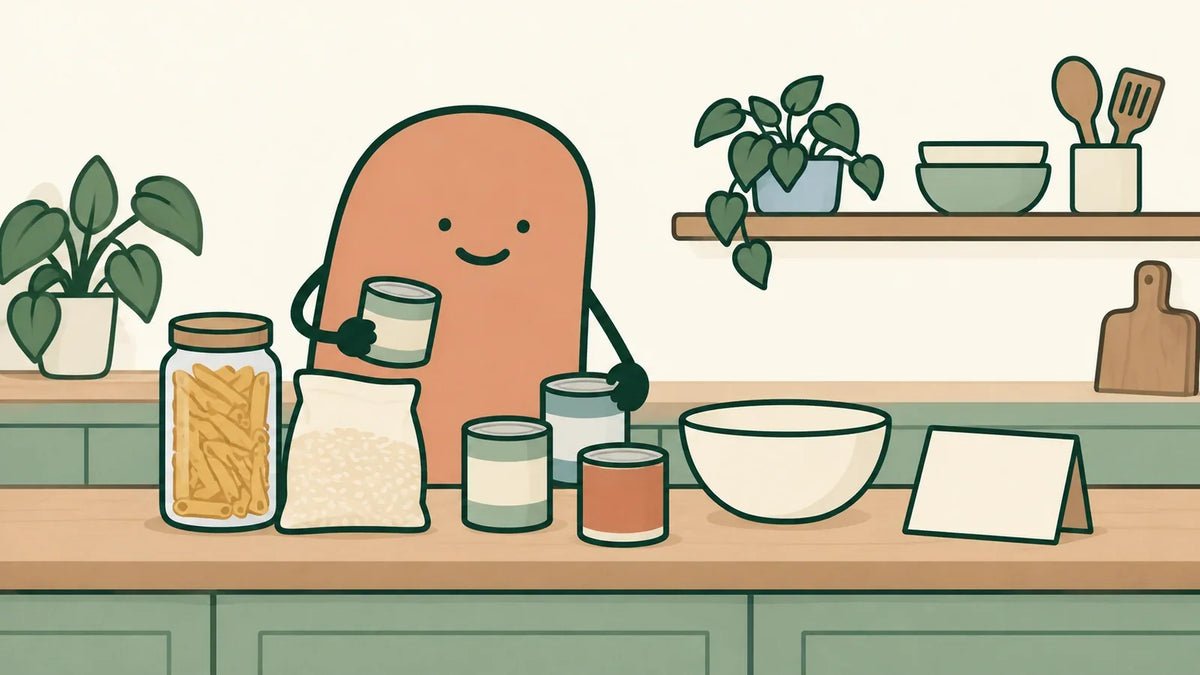
A useful backup dinner is a familiar meal you can make from supplies you normally keep, with equipment and time you actually have. Choose one option, check every required component, and decide how you will replace it after use. Its purpose is to answer “What can we do tonight?” when the original dinner no longer fits.
This is an organization exercise, not a recommended diet or a claim that pantry food is better or worse than other food. Your preferences, allergies, care instructions, budget, and household determine which option belongs in your kitchen.
Start with an evening you recognize
Describe the disruption the backup needs to handle. A late arrival is different from a broken stove, an unexpected guest, or a missed grocery delivery. If cooking is possible but time is short, a familiar meal with few active steps may fit. If equipment is unavailable, that same meal may be useless.
Do not ask one dinner to solve every possible problem. Start with a situation you have actually encountered. “The planned meal takes longer than the time available after work” is specific enough to guide the choice. “Be prepared for anything” can lead to a costly shelf of food nobody wants.
Select something you already eat
Look for a combination your household recognizes and is willing to use. Depending on your circumstances, that could be a familiar pasta meal with a commercially packaged sauce, a suitable packaged soup with an accompaniment, or another ordinary pantry-based option. These are examples of formats, not nutritional recommendations or instructions for particular products.
A backup that requires learning a recipe during the difficult evening has added a new task. If the meal is unfamiliar, try it on an ordinary occasion before relying on it. Check the preparation directions and include the work around cooking: opening packages, finding utensils, serving, and cleanup.
You also do not have to cook from scratch to make a legitimate dinner decision. A familiar prepared option can serve the same organizational purpose when it fits your needs. Choose what is usable rather than what looks most resourceful in a photograph.
Check the entire chain
Write the meal on a card and list what it needs. Include the less visible requirements: water, a can opener if needed, the correct cooking vessel, suitable storage, and any accompaniment you consider necessary. An unopened can is not a complete plan if the only opener is missing.
Check whether each product is actually shelf stable. USDA's Food Safety and Inspection Service explains that some canned products still require refrigeration and are labeled accordingly. Packaging alone does not tell you where a food belongs. Follow the manufacturer's storage and preparation directions, including instructions after opening.
This is an ordinary busy-evening backup, not an emergency food plan for a power outage or loss of safe water. Those circumstances require their own safety guidance. Do not assume a shelf-stable ingredient means a completed meal or opened package can also remain on the shelf.
Make the dinner possible without buying a stockpile
Keep only an amount that fits your storage and normal use. The backup should be part of the food you eat, with supplies checked and replaced, rather than a permanent display reserved for a theoretical crisis. Avoid buying a large quantity before you know the option works for your household.
Put the note somewhere useful for the person making the decision. That might be the household grocery list or a kitchen drawer. Keep foods in the storage conditions they require; you can group the plan on paper without physically placing every ingredient in one basket.
A fallback with a specific job
Fictional example: Marcus usually cooks a familiar dinner after work. On days when an appointment runs late, the chopping and cleanup no longer fit. He chooses a pantry meal he already enjoys, checks the package instructions, and confirms that the necessary pot and opener are available.
His note says: “If I get home too late for tonight's planned preparation, use the pantry dinner.” He does not add a second shopping trip or an unfamiliar recipe. After using the option, he adds the consumed ingredients to the next normal grocery list.
If the same backup is used several times, Marcus looks at the original evening plan. It may be too elaborate for that part of his week. Repeated use is information about the plan, not evidence that he failed to cook properly.
Decide when this option does not fit
The backup may not suit an additional diner, a change in dietary needs, or an equipment problem. Keep those limits clear. Another suitable meal is allowed; the card is a convenience, not an instruction to ignore changed circumstances. Follow individual professional guidance where food is part of your care.
For the broader planning decision, see meal planning without Sunday prep. For changing the size of an action when an ordinary day gets crowded, see choosing a smaller useful version.
One Thing at a Time helps connect these practical choices across meals, work, and ordinary routines. Explore the complete method if you want a way to plan, observe, and adjust beyond this single dinner decision.
Source: USDA Food Safety and Inspection Service, Shelf-Stable Food Safety. Storage classification informs the safety boundary; meal selection and the fictional example are practical editorial applications.
