
Meal Planning When Everyone at Home Wants Something Different
Agree on one shared meal structure, keep a few choices flexible, and divide the work without turning every preference into a separate dinner.
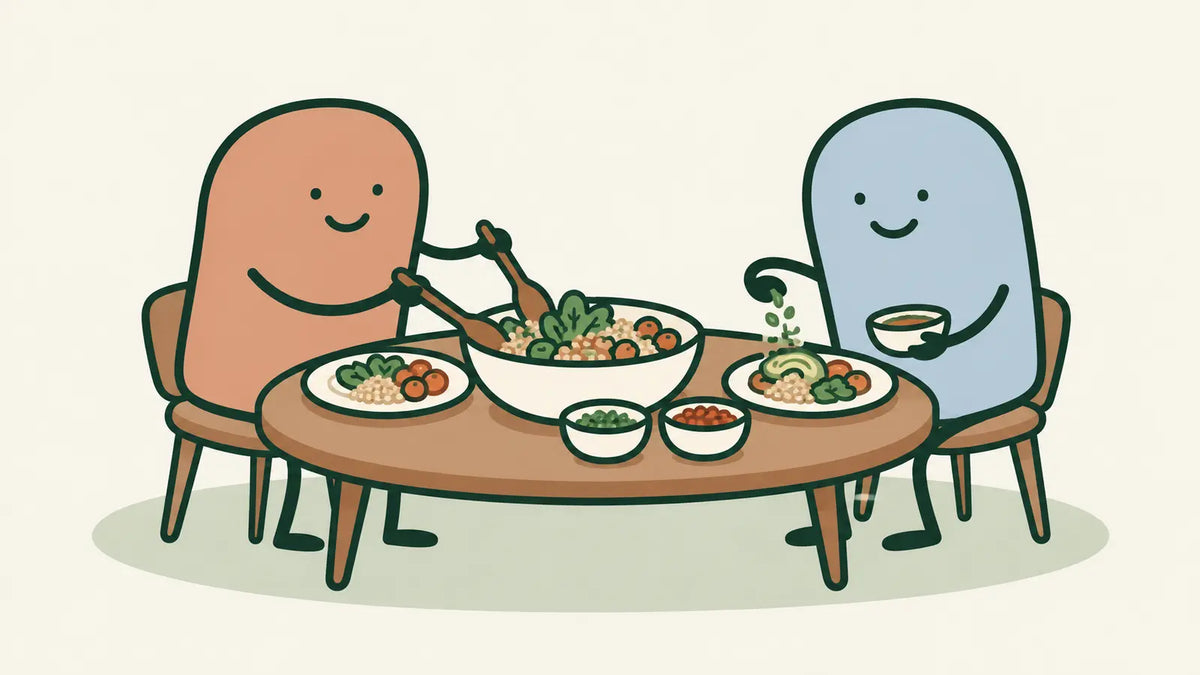
When people at home want different meals, begin with one dinner everyone is willing to help make workable. Agree on what can be shared and what can stay separate, then decide who will handle each part. The goal is a practical agreement for that meal, not persuading everyone to like the same food.
The familiar question “What does everyone want?” can open several unrelated menus. By the time the answers arrive, one person may be left trying to combine them while also cooking. A narrower question gives the household something concrete to decide: “For Thursday, could we use this meal as a starting point, and what would each person need to change?”
Separate preferences from requirements
Before negotiating, identify anything that is not a preference. Allergies, medically necessary dietary requirements, religious practices, and firm personal boundaries deserve to be understood as such. Do not put them to a household vote or treat them as obstacles to overcome.
For food allergies, a shared base with separate toppings is not automatically safe. Ingredients and preparation matter. The FDA advises reading ingredient information each time, because products can change; it also explains that advisory “may contain” statements are voluntary. Follow the person's established safety plan and professional guidance. If an arrangement is uncertain, choose an alternative you already know is suitable rather than experimenting at the table.
This article concerns ordinary household coordination. It is not a meal prescription or a way to change someone's clinical food plan. The book makes that boundary explicit on PDF pages 99 and 105.
Choose one structure that leaves room for difference
A flexible structure is a familiar meal with a part people can adjust without starting again. Depending on your household, that might mean serving a sauce separately, using the same already-suitable base with different additions, or assembling individual portions from a few agreed components. Choose foods and arrangements that fit your own needs, culture, budget, and equipment.
There is no requirement to create a buffet. If flexibility adds six bowls, several extra purchases, and a second cooking session, it may be more work than the original problem. Ask what the smallest useful difference would be. Sometimes the answer is simply leaving one seasoning or accompaniment available at the table.
Keep the agreement specific enough to use. “Everyone can customize dinner” leaves the work undefined. “We are making the meal we already know; the sauce stays separate, and each person handles their own addition” describes an arrangement.
Include the work in the agreement
Who decides, checks what is available, prepares the shared part, handles additions, and cleans up? You do not need equal tasks to make the arrangement acceptable, but you do need to know what people have actually agreed to do. Avoid assigning a new responsibility to someone who was not part of the conversation.
Health Canada's food guide encourages involving others in meal planning and preparation. Our one-meal agreement is a practical application of shared participation, not a research-tested formula for resolving household conflict.
A useful question is: “Does this still work for the person doing most of the preparation?” An arrangement that gives everyone choices by giving one person several extra jobs has not resolved the coordination problem.
A small agreement, worked through
Fictional example: Alex and Rowan share a home and both eat a particular pasta meal comfortably. Alex likes a stronger sauce; Rowan prefers it mild. Their usual discussion becomes a debate over completely different dinners.
For one Thursday, they agree on their familiar pasta meal with the sauce served separately. Rowan prepares the shared portion. Alex takes responsibility for the optional stronger addition and for checking that it is already available. They also agree who cleans up. They are not using this example to manage an allergy or a medically prescribed diet.
The next day, they ask whether the arrangement was acceptable to both and whether it created more work than expected. If it worked, they can keep it as an option. If separate sauce was inconvenient, they can change that detail. Neither person has to declare the other person's preference unreasonable.
Have an answer for “we cannot agree”
A shared dinner is not mandatory. If no manageable common structure exists for this occasion, agree on separate arrangements with clear responsibilities. That can be an honest solution rather than a failed family meal. It may also be appropriate when people arrive at very different times or need different preparation conditions.
Do not make someone earn an alternative by tasting food, defending their appetite, or agreeing to eat less. This is an adult organizational discussion. Significant anxiety, restriction, or distress around eating needs appropriate professional support, not pressure to make a menu more convenient.
Once the agreement is settled, simple meal planning without a large Sunday preparation session addresses the separate question of getting ready. The decision here is who agrees to what, for one actual meal.
Keep the useful decision
Write the agreement in one line where the people involved can find it. Include the meal, what stays flexible, and who owns any extra work. Do not expand a workable Thursday into a seven-day system unless you actually need one.
One Thing at a Time treats food organization as a question of circumstances and decisions, without prescribing a diet. Its complete method helps you test a manageable arrangement and decide what to keep. Explore the book's approach to ordinary weeks.
