
Make a Habit Easier to Start by Removing One Practical Obstacle
The first step may be hidden behind a missing object, an unclear choice, or a crowded surface. Here is how to identify and remove one practical obstacle.
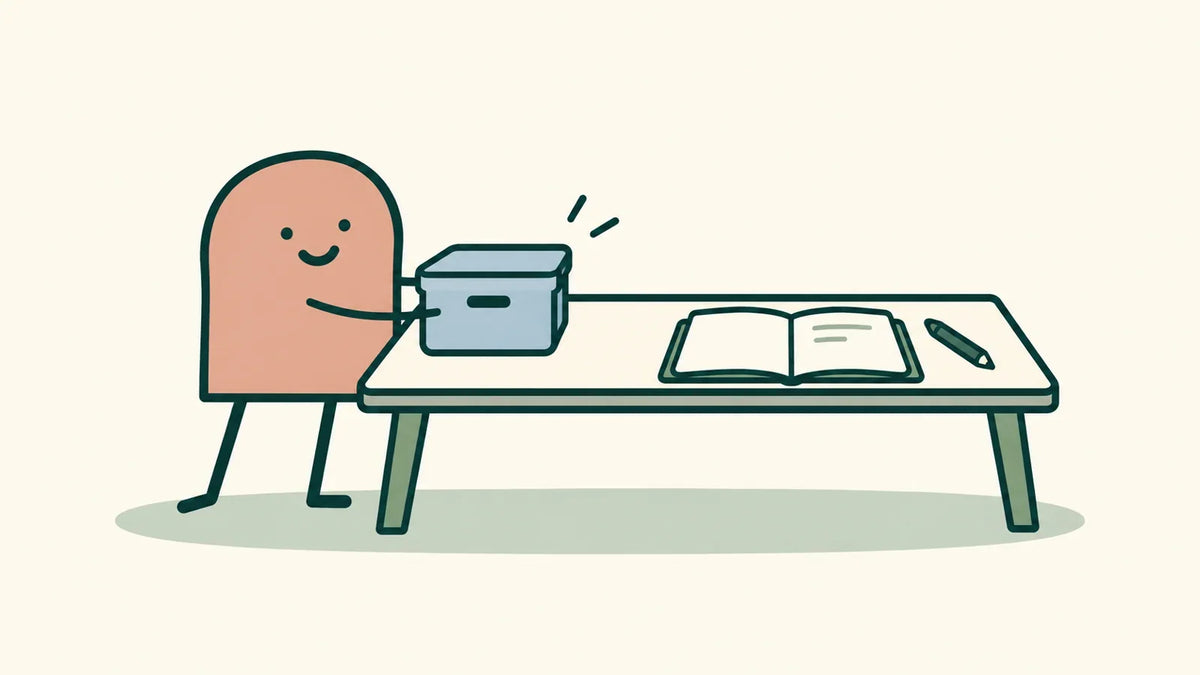
To make a habit easier to start, look at what happens immediately before the first step. Is the object missing? Is the place occupied? Do you still need to decide what the action means? Choose one practical obstacle, change that part of the setup, and try the action again.
This will not explain every missed plan. It gives you one specific thing to investigate before turning a disappointing attempt into a conclusion about your motivation.
Describe the start as a short sequence
Choose an action you already intended to try. Then write everything you must do before the action itself begins. Be literal. “Write tomorrow's first task” might require finding a notebook, finding a working pen, moving mail off the table, and remembering which page you used yesterday.
That list is the setup. It is different from the action you wanted to practice. Seeing it separately can reveal why an apparently small task has a surprisingly complicated entrance.
Do this for one routine, not every part of your life. An inspection of the whole house can become another large project. You are looking for the next obstacle you encounter, not designing a perfect environment.
Name the obstacle without judging yourself
Use a description that someone else could recognize:
- “The notebook is usually in another room.”
- “The table is occupied at the time I planned to use it.”
- “I have four possible tasks and have not chosen one.”
- “The item belongs in a shared space, so I cannot leave it out.”
“I am bad at routines” does not tell you what to change. “I need to search for the pen before I can begin” does. Keep the description at the level of the situation, even if you feel frustrated with the wider pattern.
Some obstacles are outside your control. A shared room, caring responsibility, or workplace rule is not simply a setup mistake. Naming that limit may lead you to change the routine itself instead of asking the environment to do something it cannot.
Choose a change that is smaller than the problem
A useful setup change is specific and cheap to test. Put the notebook with the pen. Choose the page in advance. Reserve a portable tray instead of a whole table. Write the next task before closing the current session.
You can use this sentence: “Before the next attempt, I will change ___ so I can begin with ___.” For example: “Before tomorrow evening, I will put one working pen inside the notebook so I can begin by writing one line.”
Do not buy an organizing system merely because the problem involves objects. Try a container, location, or arrangement you already have. The test is whether the action becomes clearer to start, not whether the setup looks impressive.
A complete example: the note that never gets written
Fictional example: Marcus wants to write one sentence about his day after dinner. He has chosen a short action and a familiar moment, but he keeps leaving it until later. When he walks through the start, he notices that his notebook travels between his work bag and bedroom.
His first change is to keep a small card and pen in a kitchen drawer. The action stays the same: one sentence after dinner. He tests that arrangement for the next three planned occasions.
On the first occasion, he writes the sentence. On the second, guests are using the kitchen. On the third, he opens the drawer but does not know what to record. Those are three different observations. The missing notebook problem appears to have been addressed; the other two occasions reveal questions about place and wording.
He can now choose his next adjustment using that information. He does not need to describe the entire experiment as either success or failure.
Check what changed before adding another fix
After your next attempt, ask: did I encounter the same obstacle, a different obstacle, or no setup obstacle? Record a short answer. If the action still feels unclear, make its first step more specific. If the intended moment never appears, check where it fits in your workweek.
A visible object is not always the right solution. In a shared home, keeping items out may inconvenience someone else. A container that can be taken out and put away may be a better arrangement. For a movement routine, the equivalent question is often how to make and clear usable space.
Let the setup serve the action
Your next step is to walk through one intended start and remove one avoidable detour. Stop there long enough to see what happens.
One Thing at a Time connects this kind of practical preparation with choosing an action, planning its place, and reviewing the result. If you have plenty of intentions but want a clearer way to test them in everyday life, the guide offers a shared structure for those decisions.
The method stands on its own. The current offer includes two years of access to a complementary private blog from its planned 2027 opening. For questions about using the product, email hello@beyond30health.com.
Explore One Thing at a Time and find a starting point that fits your week.
