How to Eat More Slowly Without Counting Every Bite
Try one comfortable change to make a meal feel less rushed, without counting chews, setting a food limit, or turning lunch into another performance test.
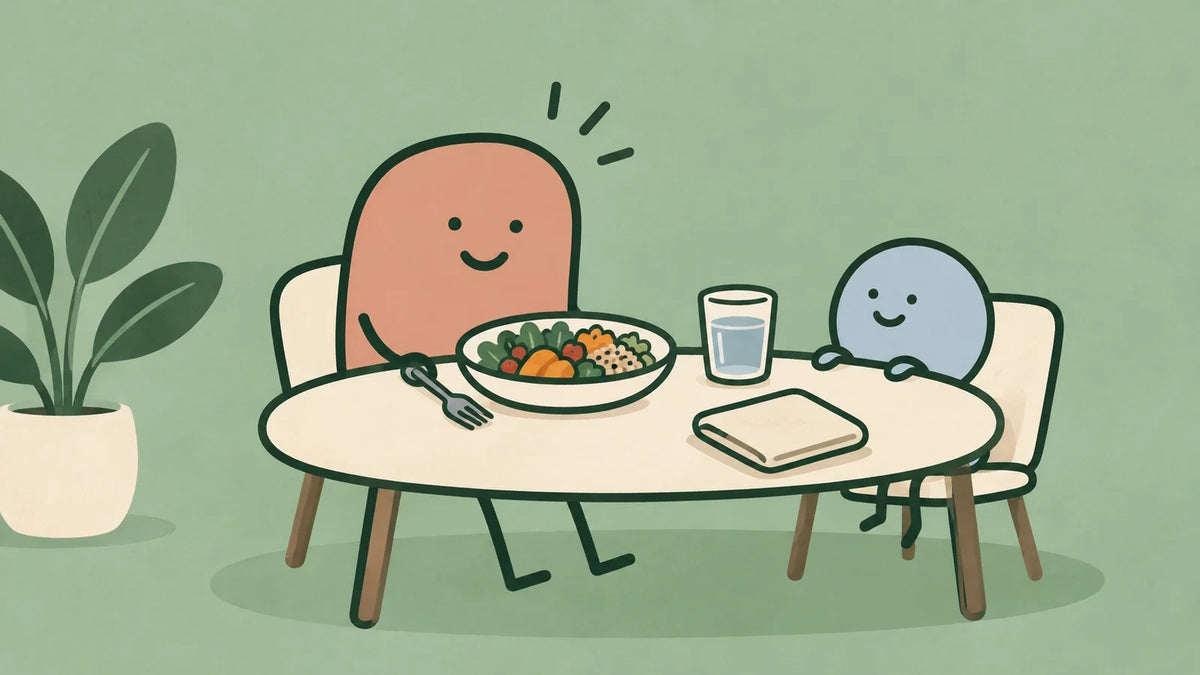
To eat more slowly without counting bites, change one part of the situation that makes you rush. Put work aside when you can, sit somewhere suitable, and let an ordinary pause happen during the meal. You do not need a chew count, a minimum meal duration, or a target amount to leave on the plate.
Perhaps you finish lunch and barely remember tasting it. Or you eat quickly because another task is already open beside the bowl. The useful question is what would give this meal a little more attention. It is not how to make yourself eat less.
Check whether you have room to eat
A rushed meal may be a time problem before it is a pace problem. If your available break barely allows you to obtain food and eat it, another instruction to slow down can create pressure. Look first at the part you can change: getting a meal ready to access, reducing an unnecessary interruption, or discussing an unworkable break arrangement through the appropriate workplace channel.
Do not postpone food you need while waiting for perfect conditions. Keep any individual advice about meals, medication, or eating difficulties in place. This is an optional way to change an ordinary eating situation, not a replacement for care.
If work keeps following you to the table, our article on arranging lunch away from desk work addresses coverage and availability. Solve that access problem separately rather than asking yourself to be mindful while answering every message.
Choose one interruption to leave out
For one suitable meal, choose one thing you would like to stop doing simultaneously. You might close the work document, leave the news feed for later, or set a nonessential task aside. You are choosing conditions for eating, not imposing silence or banning conversation.
Canada's Food Guide describes mindful eating as awareness of eating habits and suggests noticing food through its aroma, texture, flavor, and taste. That guidance supports paying attention to the experience. It does not supply a universal number of chews or a guaranteed result for your appetite.
You can notice something simple: the warmth of the food, a texture, or whether you like the flavor. There is no need to keep a sensory checklist. If concentrating on eating feels uncomfortable, you may prefer an ordinary conversation or to leave this suggestion aside.
Allow a pause without making it a rule for every bite
One option is to put your utensil down at a natural pause, such as while listening to someone or reaching for a napkin. Continue when you want to. This is a practical suggestion, not a research-tested dosing schedule and not a way to delay needed food.
Avoid replacing the old hurry with constant monitoring: “Was that bite slow enough? Did I pause correctly?” You do not need to make every mouthful identical. Different foods and ordinary conversation produce different rhythms.
Likewise, a meal that remains short is not automatically a failed meal. The point is whether you had an opportunity to eat without as much competing activity. Counting minutes can become another task that distracts from that purpose.
A fictional example: lunch without the open spreadsheet
This example is invented to show a choice, not a reader result. Morgan usually eats beside an open spreadsheet and answers questions between mouthfuls. Morgan does not want to weigh food, track bites, or create a new eating routine.
For one lunch when duties allow, Morgan saves the spreadsheet and closes the laptop. Partway through the meal, Morgan rests the fork while talking with a colleague. There is no timer and no requirement to leave food unfinished.
Later, Morgan can describe the arrangement: “I ate without working on the sheet.” Whether the meal felt different is an impression, not proof that the change altered digestion, hunger, or health. If the arrangement was pleasant and practical, it can remain an option.
Keep eating pace separate from a food target
Eating speed, chewing, the amount eaten, and feeling hungry are separate questions. Research about one does not justify promises about all of them. This article does not promise weight change, improved fullness, or a particular health effect, and it sets no intake target.
If attention to eating turns into anxiety, guilt, counting, compensating, avoiding meals, or trying to restrict food, stop using this exercise and speak with an appropriate professional. A history of disordered eating is a reason to get individual guidance before changing eating habits. An organizational suggestion should not become permission to override that support.
Try a more comfortable setting, then decide
You can finish the experiment with one question: “Did this arrangement let me give the meal the attention I wanted?” No meal log or streak is required. Keep a helpful change, adjust an awkward one, or leave the idea alone.
One Thing at a Time keeps food organization separate from dieting. PDF pages 103 to 105 explain the boundaries around pace, appetite, and food difficulties. Explore the complete book for the wider method of choosing a useful action, fitting it into ordinary life, and deciding what deserves to stay.
Reference: Health Canada, Canada's Food Guide, Be mindful of your eating habits, updated May 4, 2026. Practical examples are editorial suggestions, not a tested eating protocol.