Pack a Lunch When You Have No Fridge or Microwave
Choose a lunch that fits the storage you actually have. Compare safe cold transport with foods labeled for shelf storage, even when no microwave is available.
If you have no refrigerator or microwave at work, decide how the food will stay safe before choosing the lunch. You can bring a meal that is suitable to eat cold and kept properly cold, or choose foods that do not require refrigeration before opening. “No reheating needed” and “no refrigeration needed” mean different things.
A list of cold lunch recipes does not settle the storage question. A cooked meal intended to be eaten cold may still need temperature control throughout the commute and the wait until lunch. Start with the actual day, including a late break, rather than assuming the food only needs to survive the trip.
Check the facilities you can really use
Ask where the lunch will wait, when you can eat, and whether any cooler or refrigerator is genuinely accessible. Check whether workplace rules allow the bag at your station and whether it would sit near heat or in a vehicle. Include utensils, a suitable place to eat, and a way to clean your hands.
You do not need to solve every future lunch. Choose one upcoming day whose arrangements you know. If the facilities are uncertain, keep that uncertainty in the decision rather than treating a refrigerator somewhere in the building as confirmed access.
Option one: food that stays properly cold
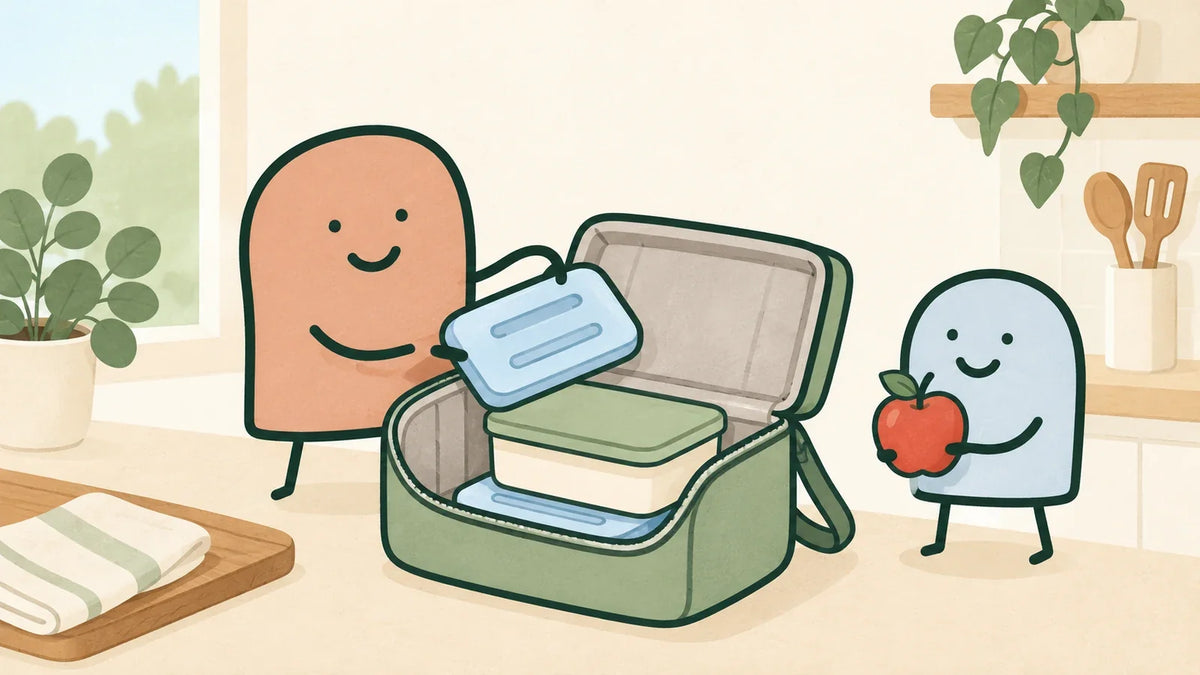
USDA guidance recommends an insulated lunch bag and at least two cold sources for perishable food. Pack it cold from the refrigerator and keep it at a safe cold temperature through the day; the target is 40°F or below. A bag and two packs are a setup recommendation, not a guarantee that any lunch stays safe for any number of hours.
Consider the real waiting time and conditions. Do not rely on a bag that cannot maintain safe temperature until you will eat. A food thermometer can help check conditions, but one cool reading cannot erase earlier time spent too warm. If you cannot provide reliable temperature control, use another meal arrangement.
Foods that were safely prepared and stored may be suitable to eat cold, but follow the food's instructions and any individual advice. A microwave being unavailable does not mean you can leave cooked leftovers unrefrigerated.
Option two: foods that do not need cold storage
Check the actual packaging. Choose intact products labeled for storage at room temperature before opening. Examples to consider, according to your needs and workplace restrictions, include whole uncut fruit, bread or crackers, and an unopened ready-to-eat shelf-stable fish pouch. A familiar nut-butter option may fit where allergies and rules allow it.
These are organizational examples, not a prescribed menu. Read storage instructions, keep packages in appropriate conditions, and open them when you are ready to eat. “Refrigerate after opening” changes the arrangement once the package is open. Choose a size you can use without depending on unavailable storage for the remainder.
Do not assume that every pouch, cheese, cured meat, or packaged lunch kit is shelf stable. Similar-looking products can have different requirements. A refrigerated product does not become shelf stable because another version is sold on an ordinary store shelf.
Build the lunch around one confirmed arrangement
Choose the storage route first, then identify a familiar meal you would actually want to eat within it. Check the budget, package instructions, dietary needs, and what must be brought from home. Avoid buying several new containers before you know which arrangement fits.
If the main issue is forgetting food that is already prepared, remembering your packed lunch on office days covers the handoff from the refrigerator. This article answers a different question: what can safely wait at the destination?
A fictional example: a site visit with no break room
This situation is invented and is not a customer outcome. Riley has a work visit where no refrigerator or microwave is available. The visit may run longer than planned, and Riley has not verified that the existing lunch bag can keep a perishable meal safely cold until the break.
For that day, Riley chooses familiar foods whose labels permit shelf storage before opening, brings the necessary utensil, and plans to open the package only when eating. Riley checks the site's restrictions and personal dietary requirements first. The choice is not a judgment that this lunch is superior; it fits the confirmed facilities.
For a later visit, Riley can investigate reliable cold storage. That is a separate planning decision. An uncertain arrangement does not have to become today's food-safety experiment.
Do not use the time limit as a packing strategy
USDA advises discarding perishable food left out for more than two hours, or one hour above 90°F. That is not a target waiting time. Count unsafe time across the day; putting food back into a refrigerator later does not undo it. When safety is uncertain, choose a safe alternative rather than tasting the food to test it.
One Thing at a Time treats meal preparation as a question of available conditions, without prescribing a diet. PDF pages 99 to 103 help keep that decision realistic. Explore the book and its reusable planning tools for a complete method that goes beyond one lunch.
References: USDA Food Safety and Inspection Service, Keeping “Bag” Lunches Safe; USDA Issues Helpful Reminders for Your School Lunch Prep; and Keep Food Safe! Food Safety Basics. Guidance checked October 16, 2026.